Table of Contents
- Why Porosity Matters More Than “Hair Type”
- How to Test Your Hair Porosity at Home
- What Hair Porosity Actually Means
- The Ingredient & Product Playbook
- Weekly Hair Care Routines by Porosity
- Protein Balance: Avoiding Overload
- Keratin, Hair Botox & Bond-Builders: Which One’s for You?
- Porosity & Hair Color Services
- Quick Troubleshooting FAQ
- Final Thoughts: Start With a 5-Minute Test
Why Porosity Matters More Than “Hair Type”
Most people choose products based on hair type—curly, fine, or color-treated—but that’s only part of the story.
The real predictor of how your hair reacts to a mask, a keratin treatment, or even a leave-in conditioner is porosity—how easily water and conditioning agents pass into and out of the hair shaft.
According to cosmetic chemists and professional stylists, porosity is one of the most reliable indicators of hair behavior—more than curl pattern or texture.
Understanding your hair’s porosity helps your routine stop being guesswork. When you get it right, your shampoo, mask, and salon service work together. Get it wrong, and even high-quality products can sit on the surface, leaving hair dry, brittle, or lifeless.
How to Test Your Hair Porosity at Home
No single test is perfect—combine 2–3 for the most accurate results.
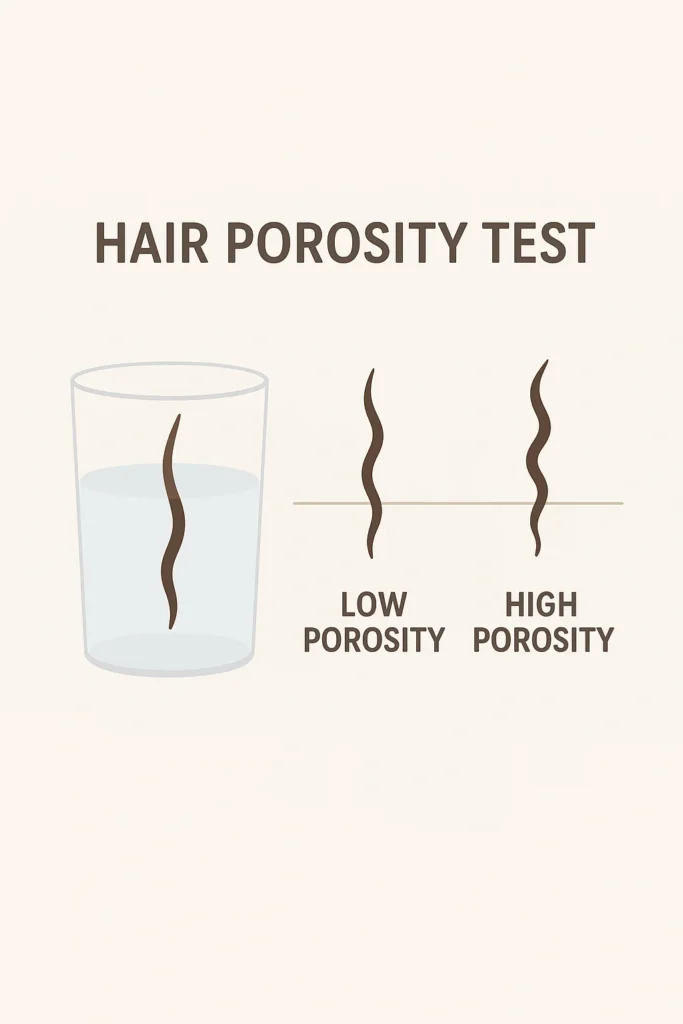
A — The Float (Water) Test
You’ll need: A clean, product-free strand of hair and a glass of room-temperature water.
- Place the strand in the glass.
- Wait 3–4 minutes.
- Observe:
| Result | Porosity Type | What it Means |
|---|---|---|
| Floats | Low | Tight cuticle; water struggles to penetrate. |
| Sinks slowly | Normal | Balanced absorption and retention. |
| Sinks quickly | High | Raised or damaged cuticle; loses moisture fast. |
Tip: Product buildup, humidity, and water surface tension can affect results. Use it as a guide, not a lab measurement.
B — The Water Absorption (Slip) Test
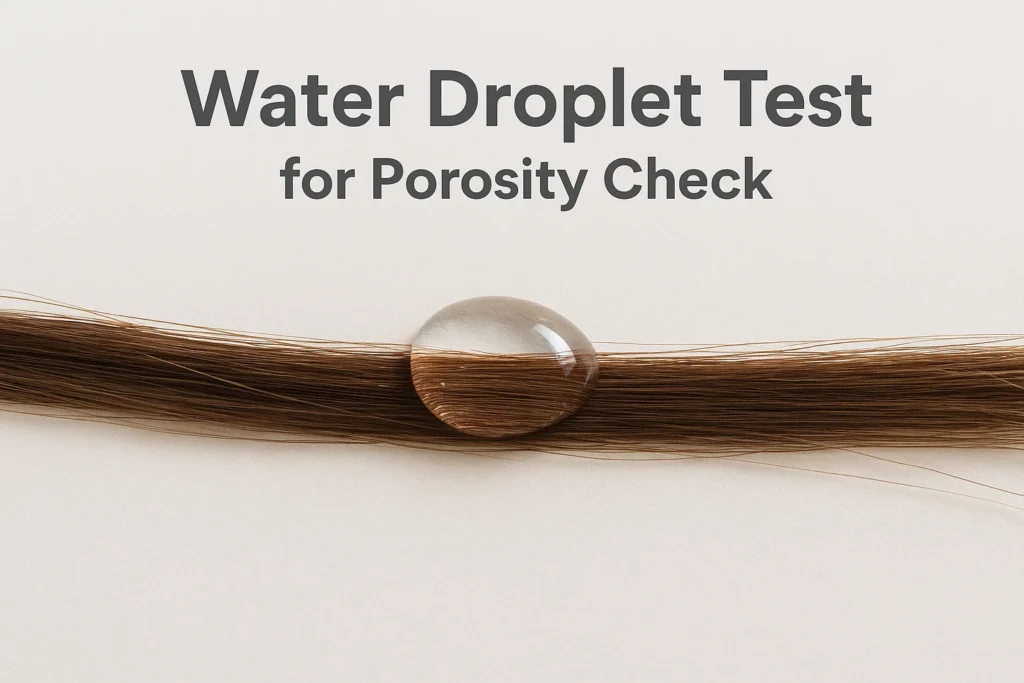
- Place a droplet of water on a clean strand.
- Watch how fast it absorbs.
- Beads on top: Low porosity.
- Absorbs quickly: High porosity.
- Takes a few seconds: Normal porosity.
C — The Strand Inspection
Hold a strand up to the light and run your fingers down it.
- Feels smooth: Low porosity.
- Feels rough or frayed: High porosity.
- Feels balanced: Normal porosity.
What Hair Porosity Actually Means
Low Porosity Hair
Cuticle layers are tightly closed.
Shiny look, but moisture-resistant — masks take longer to absorb.
Pro Tip: Use gentle heat (warm towel or steamer) when deep-conditioning.
Normal Porosity Hair
The ideal balance — absorbs and retains moisture well.
💧 Responds predictably to treatments and color.
Routine Goal: Maintain balance with hydration and light protein care.
High Porosity Hair
Cuticle is lifted or damaged from heat, bleach, or color.
Absorbs moisture fast but loses it quickly.
Often feels frizzy or rough.
Pro Tip: Focus on repair and sealing moisture with oils or bond-builders.
The Ingredient & Product Playbook
For Low Porosity Hair
Use: Lightweight humectants (glycerin), low-weight oils (argan), and water-based leave-ins.
Avoid: Heavy butters or thick proteins.
Routine Tip: Apply masks on damp hair and add gentle heat for better absorption.
For Normal Porosity Hair
Use: Moisturizing conditioners and masks weekly; mild protein monthly.
Avoid: Product buildup.
Routine Tip: Alternate between hydration and strengthening masks.
For High Porosity Hair
Use: Bond-repair products, protein masks, and sealing oils (jojoba, shea, coconut).
Avoid: Over-clarifying.
Routine Tip: Always seal with oil after applying leave-in.
Weekly Hair Care Routines by Porosity
| Porosity Type | Wash | Mask | Style/Protect |
|---|---|---|---|
| Low | Sulfate-free shampoo (clarify 2–3 weeks) | Weekly mask + heat | Light leave-in + argan oil |
| Normal | Gentle shampoo + conditioner | Hydration mask weekly | Rotate moisture + protein |
| High | Gentle shampoo + conditioner | Bond-repair + oil seal | Bond treatment every 4–8 weeks |
Protein Balance: Avoiding Overload
Protein strengthens hair — but too much can make it stiff or brittle.
If your hair feels hard, straw-like, or coated, you may be in protein overload.
| Porosity | Protein Frequency | Warning Sign |
|---|---|---|
| Low | Rarely | Hair feels coated |
| Normal | Monthly | Slight stiffness |
| High | Weekly–biweekly | Still brittle after mask |
💡 Fix: Pause protein use for 2–3 weeks and switch to moisture-rich masks.
Keratin, Hair Botox & Bond-Builders: Which One’s for You?
According to cosmetic chemist Tonya McKay (NaturallyCurly), porosity plays a larger role in product absorption than curl pattern.
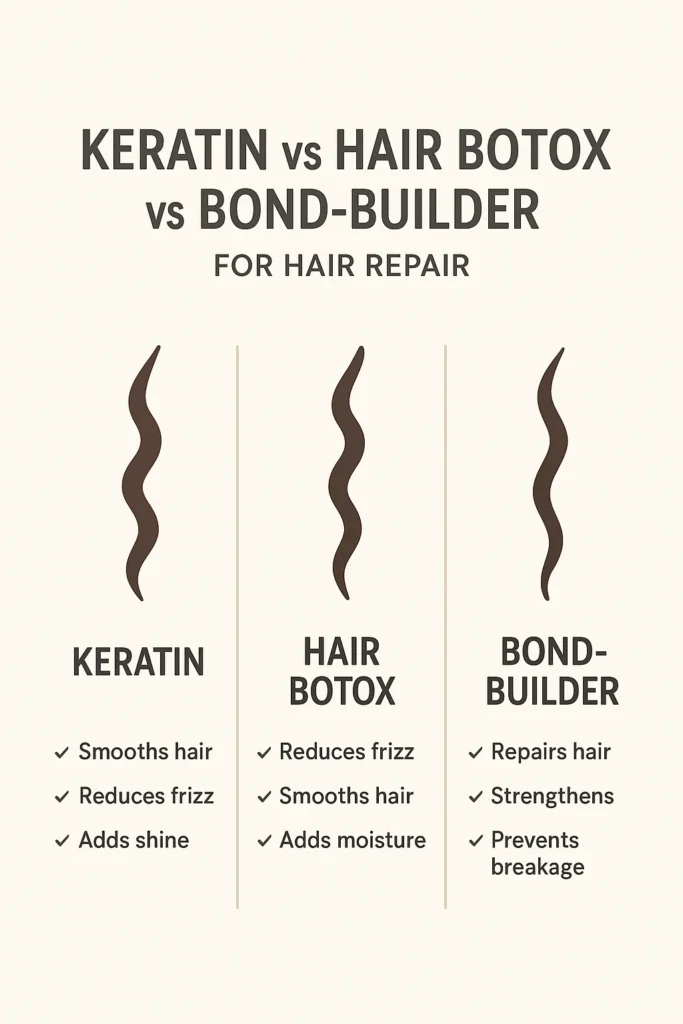
Keratin Treatments
✅ Smooth and seal the cuticle — ideal for normal or high porosity.
❌ Not ideal for very low porosity.
Hair Botox
Deep-conditioning filler that restores softness and volume.
Best for low-to-normal porosity hair needing body without buildup.
Bond-Builders
🧬 Rebuild internal hair bonds damaged by bleach or heat.
Essential for high-porosity or color-treated hair.
At Professional Probelle, our Brazilian Protein and Hair Botox BTX systems are tailored to balance porosity and shine.
Quick Guide:
- Frizz issue → Keratin or Hair Botox BTX.
- Breakage issue → Bond-builder (S.O.S ).
Porosity & Hair Color Services
- High Porosity: Absorbs color fast but fades quickly — prep with bond repair before & after.
- Low Porosity: May resist color — clarify and use moisture mask before coloring.
Tip: Ask your colorist to test porosity before applying color for even results.
Quick Troubleshooting FAQ
Q: My hair is low porosity but still dry.
A: Clarify buildup, then deep-condition with heat.
Q: My hair sinks in water but still breaks.
A: That’s high porosity — it absorbs but loses moisture fast. Focus on sealing.
Q: Can porosity change?
A: Yes. Heat, color, and treatments alter it. Re-test every 3 months.
Final Thoughts: Start With a 5-Minute Test
Porosity is the missing key to a truly personalized hair routine. Once you know whether your hair is low, normal, or high porosity, every product—from shampoo to salon treatment—works with your hair, not against it.
Ready to start? Test your porosity today, then explore our Hair Botox BTX line for customized repair and shine.
About Professional Probelle
Professional Probelle is a Brazilian professional haircare brand, bringing salon-grade solutions to the Canadian market. Our Hair Botox BTX and Keratin treatments combine advanced amino acid and bond-repair technology to strengthen, smooth, and protect all hair types — scientifically informed and stylist-approved.